If you are looking at mixed-use or multi-family property in Highland Park, the opportunity is real, but the details matter. This is not a market where you can underwrite on unit count alone and hope the location carries the deal. You need to understand where mixed-use is actually workable, how parking shapes value, and which local rules can change your timeline and costs. Let’s dive in.
Why Highland Park stands out
Highland Park offers a different profile than many suburban markets. The city’s 2025 population estimate is 30,767, with an 83.8% owner-occupied housing rate, a median household income of $168,094, a median owner-occupied home value of $607,300, and a median gross rent of $1,925.
Those numbers point to a market with spending power, housing stability, and expectations around quality. For you as an investor, that can mean finishes, parking access, and walkability may matter more than simply adding as many units as possible.
The city also has a business structure that supports a more layered commercial environment. Highland Park identifies nine business districts and three main commercial areas: the Central Business District, the Skokie Corridor, and the Ravinia Business District.
That matters because mixed-use investing tends to work best where there are established nodes, not isolated commercial parcels. In Highland Park, the city’s planning framework and public investments suggest a corridor-and-nodes market rather than a purely residential suburb with scattered retail.
Where mixed-use deals are most realistic
If you are searching for true mixed-use potential, downtown and corridor locations deserve your attention first. The zoning map identifies commercial districts including B1, B1A, B2, B2-RW, B3, B4, and B5, along with multiple-family districts RM1, RM1A, RM2, and RO.
In practical terms, the most realistic mixed-use opportunities are tied to the Central Business District, Ravinia, and similar corridor locations where commercial activity, public parking, and pedestrian access already exist. The downtown parking map reinforces that pattern, showing a walkable core anchored by City Hall, the public library, the Metra station, Port Clinton Square, Renaissance Place, and several public garages and lots.
Focus on B4-BG, B5, and RO
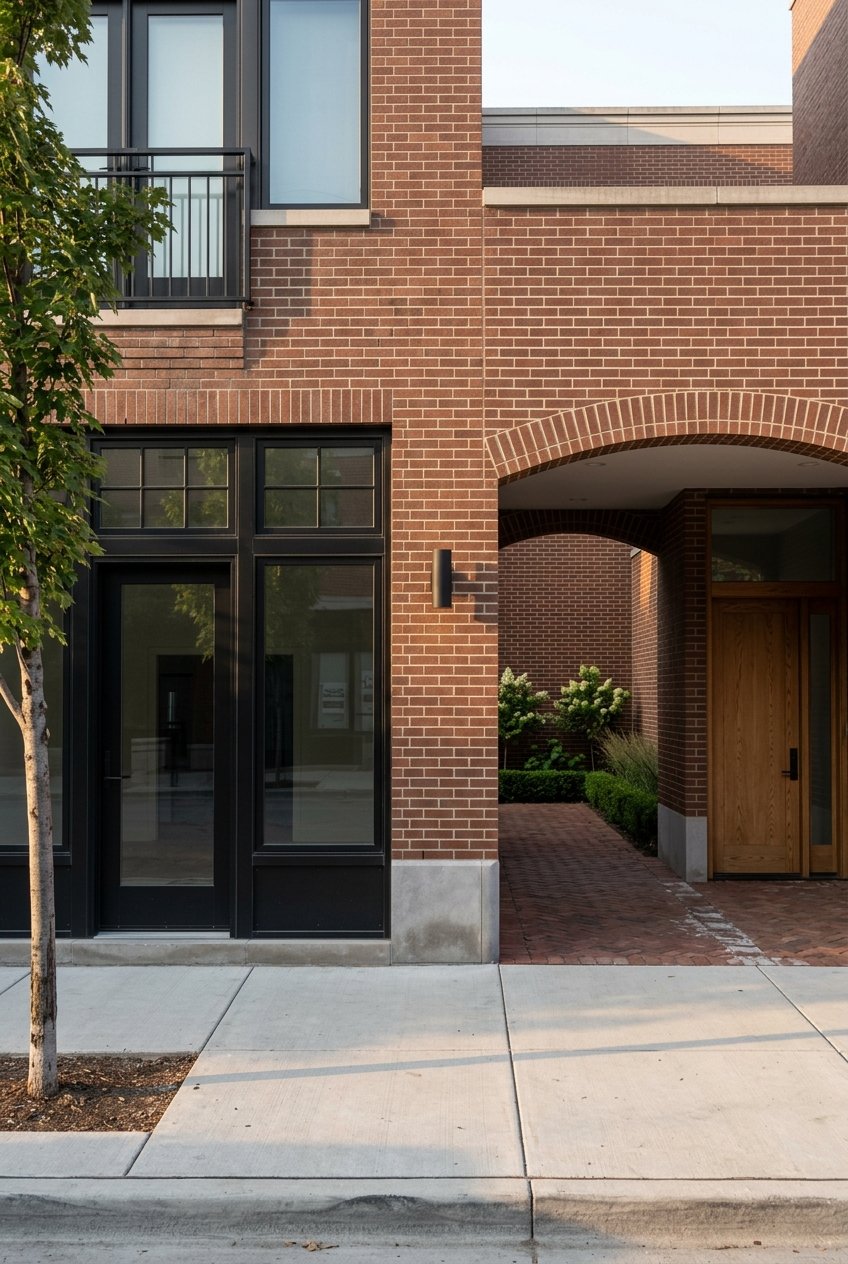
Some districts are especially important for investors. B4-BG stands out because the zoning code requires the first floor of all buildings on mixed-use lots to contain only commercial uses with pedestrian-oriented and public access, unless a Planned Development is approved.
That means B4-BG is not a standard apartment play with a token retail component. It is a true corridor-oriented mixed-use zone, and your concept needs to fit that design logic from the start.
B5 and RO are also worth close attention. Based on the zoning framework, these districts support higher-density residential, office, and mixed-use patterns that can align with walkable retail-residential projects, especially in established commercial nodes.
Ravinia deserves a closer look
Ravinia is not just another retail strip. The city has adopted a Ravinia Business District Streetscape and Lighting Plan, which signals continued public-realm investment in that area.
For you, that is useful because public improvements can support tenant appeal and the overall leasing environment. It does not remove deal risk, but it does suggest that the area is being treated as an important long-term commercial district.
Where smaller multi-family fits best
If your strategy is more focused on apartment buildings than mixed-use storefront assets, the RM districts should be central to your search. Highland Park’s zoning map identifies RM1, RM1A, and RM2 as multiple-family districts.
These areas are the closest fit for compact multi-family inventory and smaller apartment-style assets. While the city does not label them in consumer terms like “courtyard buildings,” the zoning structure suggests these districts are where that type of housing is most likely to align.
RO can also matter if you are looking at higher-density residential or office-related opportunities. The key is to review each site individually because overlays and district-specific rules can affect what is feasible on paper versus what is practical in the field.
Parking is the underwriting issue you cannot ignore
In Highland Park, parking is one of the biggest factors that can reshape a deal. The city applies tailored off-street parking standards in RO, B4-4, B4-5, B4-6, B4-BG, and B5 for multiple-family dwellings, using requirements tied to unit size or 1.4 spaces per unit.
In other districts, multi-family parking uses a different schedule based on studio, one-bedroom, and two-plus-bedroom units, plus guest parking. That means your parking burden may change significantly depending on the zoning district, even if the building program looks similar.
Downtown parking can help, but do not assume
There is good news here. Highland Park’s downtown parking network includes public garages and lots serving the Central Business District, Port Clinton, Renaissance Place, and station-area locations.
That public supply helps support mixed-use leasing and can make ground-floor commercial more viable than it would be in a less walkable suburban setting. Still, you should not assume nearby public parking automatically solves private compliance requirements.
The code allows off-street parking to be satisfied on a separate lot within 1,000 feet by sidewalk travel distance to the main entrance. Mixed-use parking also generally needs to be calculated by adding the requirements for each use, unless a shared arrangement is approved.
Structure and access matter early
Parking structures in RO, B4-4, B4-5, B4-6, B4-BG, and B5 are separately regulated. That means parking is not only a math issue. It is also a placement, access, and design issue that should be tested during early feasibility, not after you are committed to a concept.
For many deals, this is where a project either becomes more compelling or starts to lose efficiency. If you are evaluating a value-add opportunity, parking should be one of the first line items you pressure-test.
Adaptive reuse may create value-add opportunities
One of the more useful parts of Highland Park’s code for investors is its treatment of certain non-residential changes of use. In B1, B1A, B2, B2-RW, B3, B4-4, B4-5, B4-6, B4-BG, B5, and I districts, a change from one allowed non-residential use to another generally does not require additional off-street parking, as long as the change is not an expansion.
That can improve the outlook for repositioning older storefront or office space. If you are considering a tired commercial asset in the right corridor, this rule may support a cleaner path to value-add without triggering a full parking reset.
That said, this flexibility applies to changes between allowed non-residential uses. It does not mean every conversion is simple, and it does not eliminate the need to review zoning, building code, and occupancy requirements carefully.
Local approvals go beyond zoning
A common mistake is treating zoning as the whole entitlement story. In Highland Park, you also need to account for building code compliance, energy requirements, accessibility review, and local registration requirements tied to the property’s use.
The city’s current building code package requires submittals to follow the 2018 IBC, IRC, and IEBC, along with related model codes. The 2021 Illinois Energy Conservation Code has been effective since January 1, 2024.
For you, that means even a small project can involve more design coordination than expected. A site that looks simple from the street may still require meaningful work to meet current code standards.
Rental and business registration matter too
Highland Park also maintains Chapter 154, titled Registration and Safety Requirements for Certain Residential Rental Property. If you are buying or operating multi-family property, that adds another local compliance layer beyond permits and zoning review.
Commercial-property businesses must register after receiving a certificate of occupancy and within 30 days of opening. The registration form lists a $35 annual fee, prorated after July 1, with renewal due by December 31 each year.
These are not usually the costs that make or break a deal on their own. But they do affect your operating checklist, timeline, and execution risk, especially if you are acquiring an asset that needs repositioning after closing.
Site risk in Highland Park is not just about the building
Physical site conditions can also shape the economics of a project. Highland Park’s zoning code notes the presence of abundant ravines and bluffs, and it states that development on steep slopes should minimize vegetation removal, stabilize slopes, and reduce erosion.
If a property sits near those features, you should expect additional engineering and sitework review. This is especially important if you are comparing two similar-looking parcels with very different topography behind the building line.
In a market like Highland Park, hidden site conditions can create more underwriting risk than the rent roll suggests. That is why due diligence should include not only zoning and parking, but also terrain and development constraints.
A practical investment lens for Highland Park
The clearest way to view Highland Park is as a market of corridors and nodes. Downtown districts like B5, RO, and B4-BG are where mixed-use concepts are most likely to make sense, while RM districts are the more natural fit for smaller multi-family assets.
The Central Business District and Ravinia stand out because they combine commercial identity, walkability, and public investment. At the same time, the city’s parking rules, building-code requirements, and site conditions mean disciplined underwriting matters at every stage.
If you are approaching Highland Park with a thoughtful strategy, there is real potential here. The best opportunities are likely to come from matching the right asset type to the right district, then pressure-testing parking, approvals, and site constraints before you move too far down the road.
For investors and owners evaluating mixed-use and multi-family opportunities on the North Shore, experienced guidance can make a meaningful difference. The AVE Group brings senior-level real estate insight, developer-minded analysis, and hands-on support for complex property decisions.
FAQs
Where are mixed-use properties most feasible in Highland Park?
- Mixed-use opportunities are most realistic in districts and corridors tied to the Central Business District, Ravinia, and zoning areas such as B4-BG, B5, and RO.
What is the biggest underwriting challenge for Highland Park mixed-use and multi-family deals?
- Parking is often the biggest challenge because Highland Park uses district-specific parking standards, separate rules for some structures, and mixed-use calculations that can affect both cost and design.
Can you repurpose an older commercial building in Highland Park?
- In many cases, yes. In several commercial districts, changing from one allowed non-residential use to another generally does not require added off-street parking if there is no expansion.
What approvals matter for Highland Park multi-family property besides zoning?
- You should also review building code compliance, energy code requirements, accessibility, local rental-property rules, and business registration requirements where applicable.
What should you watch for when evaluating a Highland Park development site?
- In addition to zoning and parking, pay close attention to ravines, bluffs, steep slopes, and other topographic conditions that may increase engineering and sitework needs.